Introduction
When building a bottled water plant, selecting the right production line is a key factor in determining project efficiency, product quality, and return on investment. Faced with varying market demands, production scales, bottle sizes, and water quality requirements, many investors encounter similar questions: What production capacity do we need? Which core systems should be included? How can we strike a balance between investment costs and production efficiency?
A complete bottled water production line must integrate water treatment systems, filling equipment, capping, labeling, and packaging equipment to cover the entire process from raw water treatment to finished product output. This article, “How to Choose a Bottled Water Production Line,” will outline the key factors to consider when selecting a bottled water production line, including production capacity planning, equipment configuration, automation levels, water treatment requirements, and methods for selecting suppliers. It aims to help investors and project managers choose bottled water production solutions that best suit their specific needs.
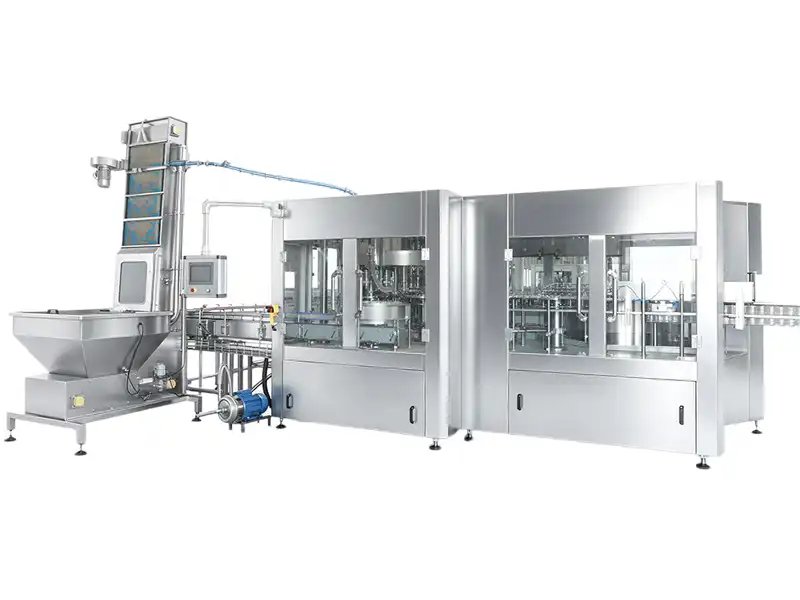
What Is a Bottled Water Production Line?
A bottled water production line is a complete industrial equipment system used for the production, filling, and packaging of drinking water, covering the entire production process from raw water treatment and purification/filtration to the output of finished bottled products. Depending on water source conditions, product type, and production capacity requirements, a complete bottled water production line typically consists of a water treatment system, bottle blowers, bottle washers, filling machines, capping machines, labeling machines, inkjet coders, and packaging equipment, enabling automated and continuous operation of the drinking water production process.
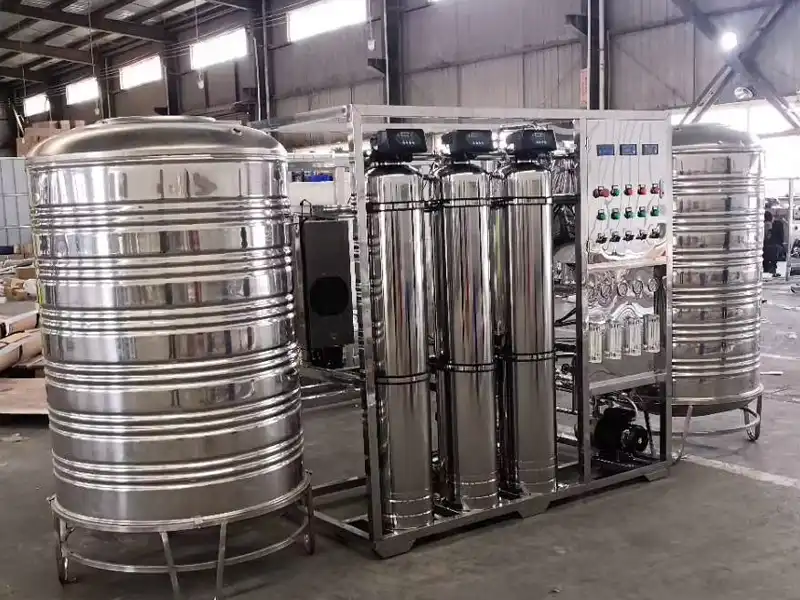
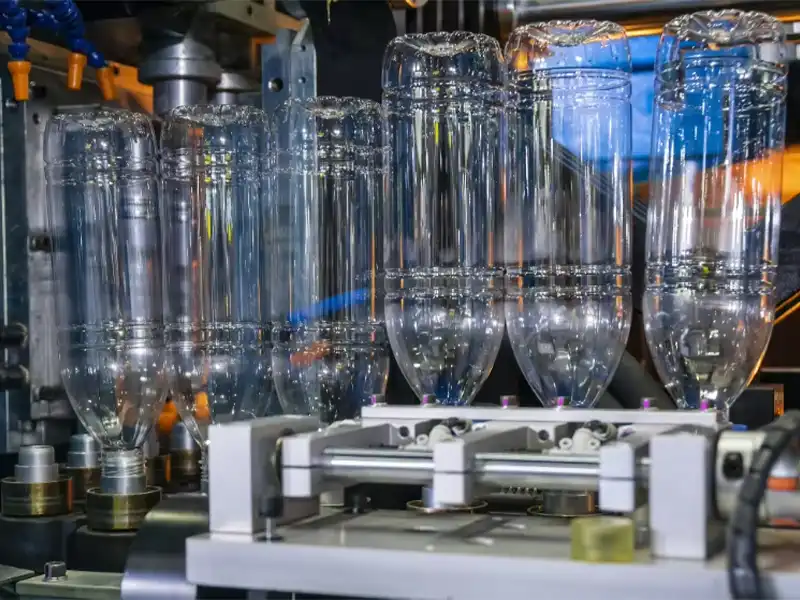
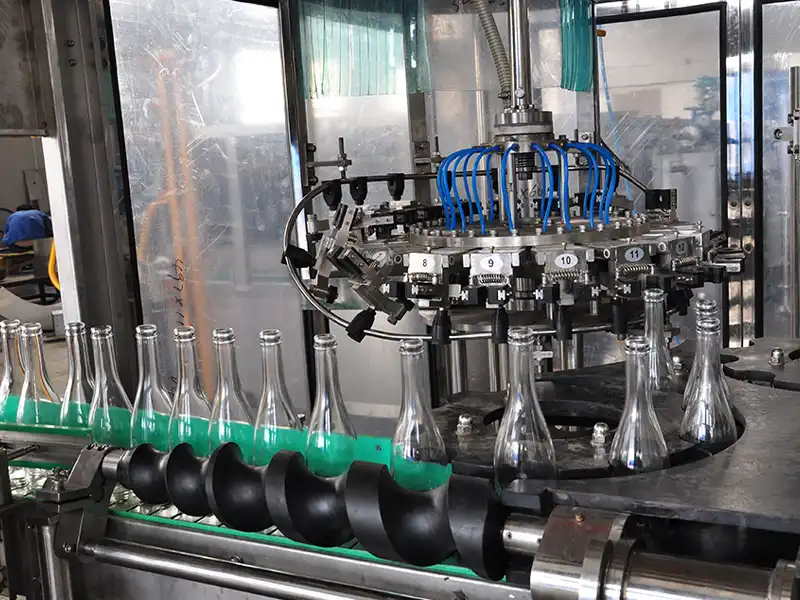
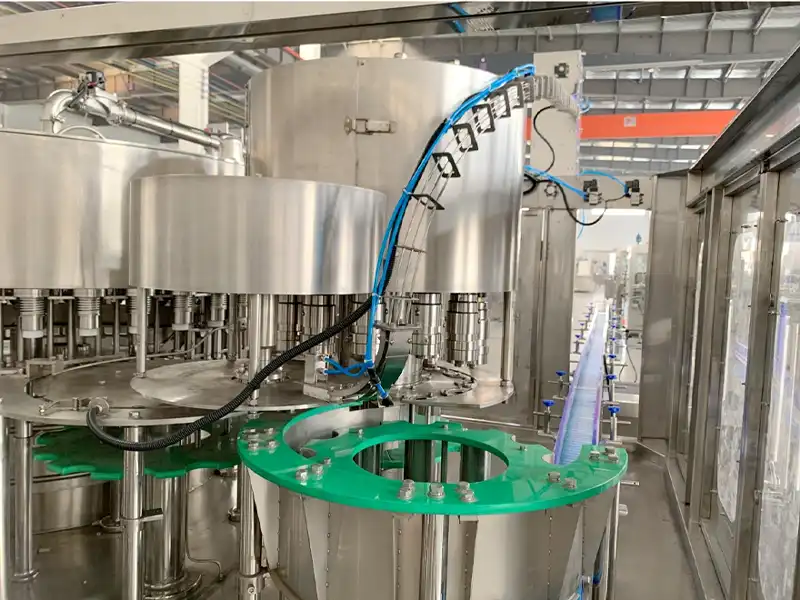
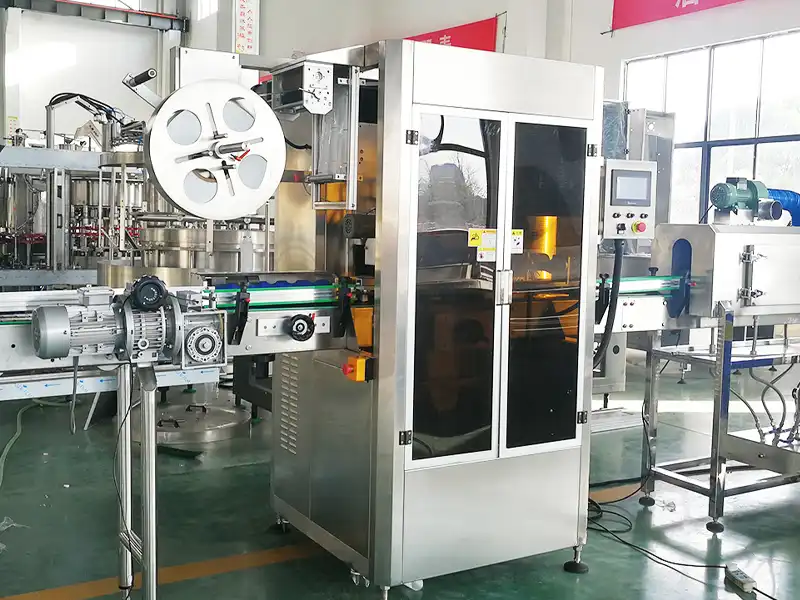
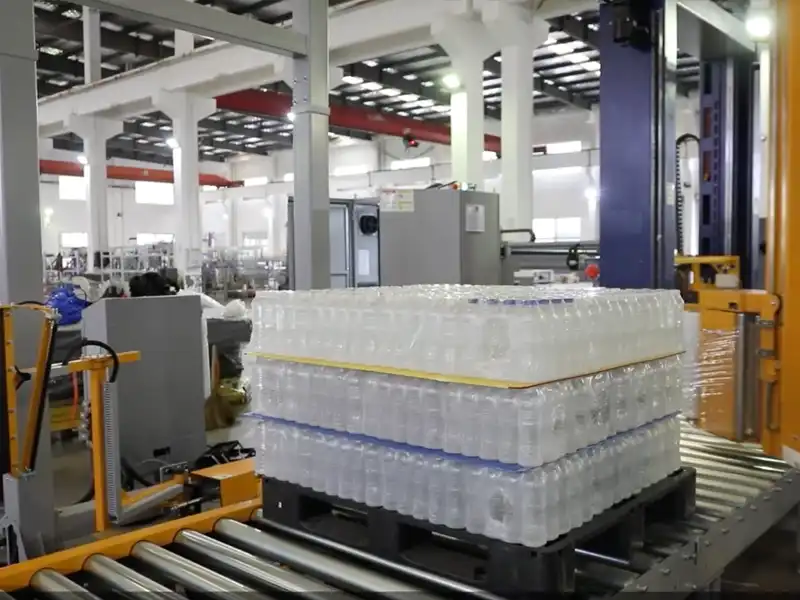
Modern bottled water production lines use various processes to filter, sterilize, and purify raw water, ensuring water quality meets drinking standards, while utilizing automated filling equipment to improve production efficiency and reduce labor costs. Depending on market positioning and investment scale, companies can choose from small-scale bottled water production lines, PET bottled water production lines, 5-gallon jug water production lines, and large-scale fully automated mineral water production lines to meet varying output and packaging requirements. For investors planning to build a bottled water plant, understanding the composition of the production line, its workflow, and equipment configuration is a crucial foundation for selecting the appropriate solution.
Why Choosing the Right Water Bottling Line Matters?
Selecting the right water bottling line is a crucial step in establishing a bottled water plant. Different production scales, product positioning, and market demands place varying requirements on equipment configuration and the level of automation. Choosing a water bottling line that matches actual needs can help companies improve production efficiency and reduce long-term operational pressures.
- Production Efficiency
- Equipment production capacity must match the actual order volume. Insufficient capacity will result in missed delivery deadlines, while excess capacity will lead to idle equipment. At the same time, equipment must operate reliably to minimize downtime due to malfunctions and ensure smooth production line operations and timely shipments.
- Product Quality
- Bottled water falls under food production, and the production line directly determines the water quality of the finished product as well as the effectiveness of filling and sealing. Proper hygienic design of the equipment is essential to minimize the risk of impurities and microorganisms, meet food production standards, and prevent batches of defective products.
- Operating Cost
- Selecting the right equipment can reduce electricity and water consumption, while a level of automation that aligns with your workforce’s capabilities can minimize labor requirements. Low equipment failure rates, readily available spare parts, and minimal costs for future maintenance and repairs help control daily production expenses.
- Future Expansion
- Market demands are subject to change; a high-quality production line should be compatible with different bottle shapes and sizes, facilitating future capacity expansion. This approach avoids the need to repurchase an entire set of equipment at the first sign of business growth, thereby reducing secondary investment costs.
Key Factors to Consider When Choosing a Bottled Water Production Line
1. Production Capacity
Before purchasing an automatic filling production line, actual production capacity is of the utmost importance. The right production capacity not only ensures stable production—avoiding both idle equipment and supply shortages—but also maximizes your return on investment. Different factory sizes correspond to different hourly production rates; you can select the appropriate specifications based on your factory size and market demand:
| Capacity | Suitable For |
|---|---|
| 2,000-6,000 bottles/hour | Small water plants |
| 10,000-24,000 bottles/hour | Medium factories |
| 30,000+ bottles/hour | Large beverage companies |
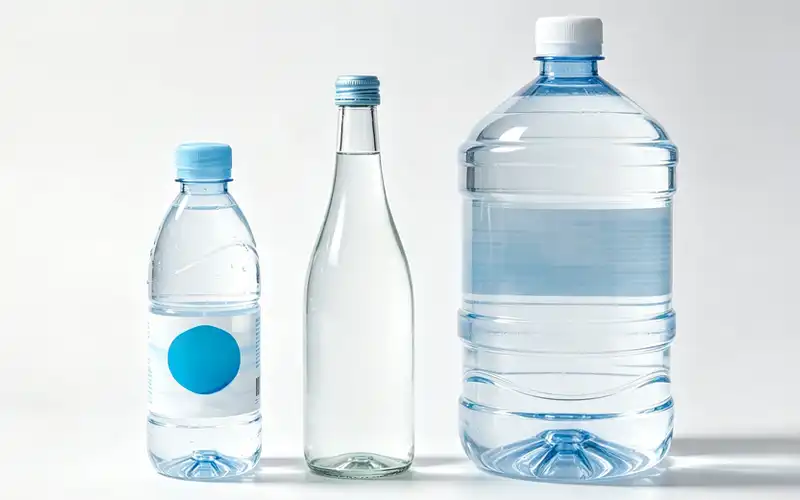
2. Bottle Type and Size
Bottle type directly determines the configuration of your bottling equipment and covers different market positioning and application scenarios.
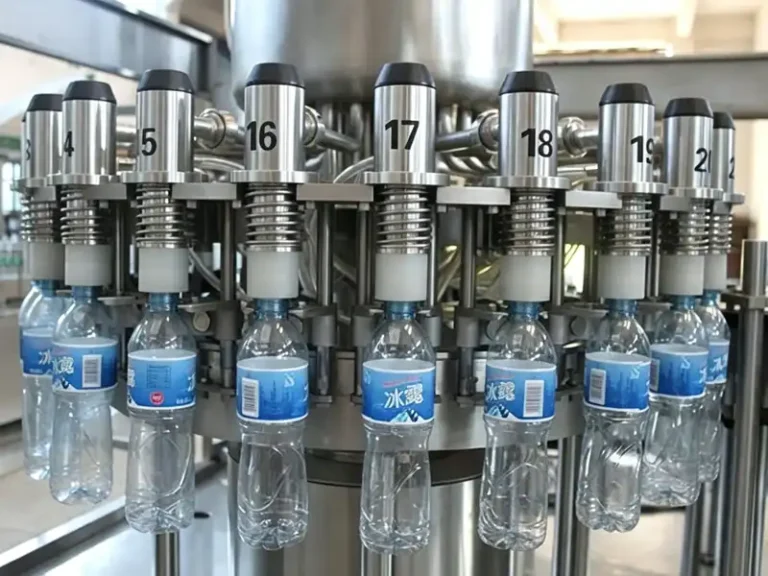
- PET Bottle
- It is the most widely used packaging for civilian drinking water, featuring low cost, lightweight and easy transportation. Applicable specifications cover mainstream civilian sizes: 330ml, 500ml, 1.5L and 2L.
- Glass Bottle
- With high-grade texture and safe & eco-friendly features, glass bottles are mainly applied to high-end mineral water products, catering to premium market demands.
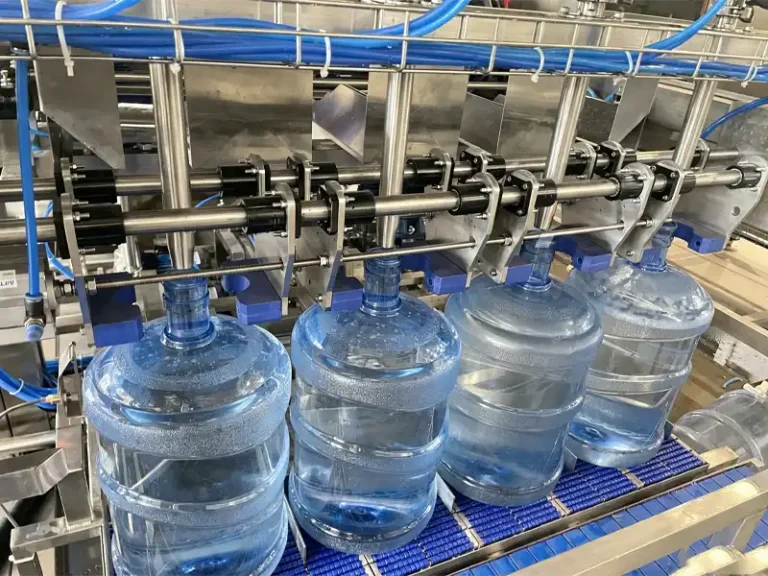
- 5 Gallon Bottle
- It is specially designed for bulk drinking water, widely used in the water delivery and distribution industry for offices, schools and families.
View more details on 5 gallon filling machine.
3. Water Treatment System
Water treatment systems are at the heart of bottled water production and directly determine the compliance of water quality and the safety of the product.
- RO Water Treatment System
- Reverse osmosis treatment effectively removes impurities, heavy metals and bacteria in water, which is the standard solution for purified water production.
- UF System
- Ultrafiltration technology retains beneficial mineral elements in water while filtering harmful substances, perfectly suitable for natural mineral water production.
- UV Sterilization & Ozone System
- As auxiliary sterilization equipment, UV and ozone systems realize deep disinfection of water body, inhibit bacterial growth, and ensure long-term shelf life of bottled water
4. Automation Level
The automation degree of the production line affects labor cost, production efficiency and operational difficulty. You can select a reasonable configuration according to your budget and output demand, with an automatic bottled water production line being the mainstream choice for modern water plants:
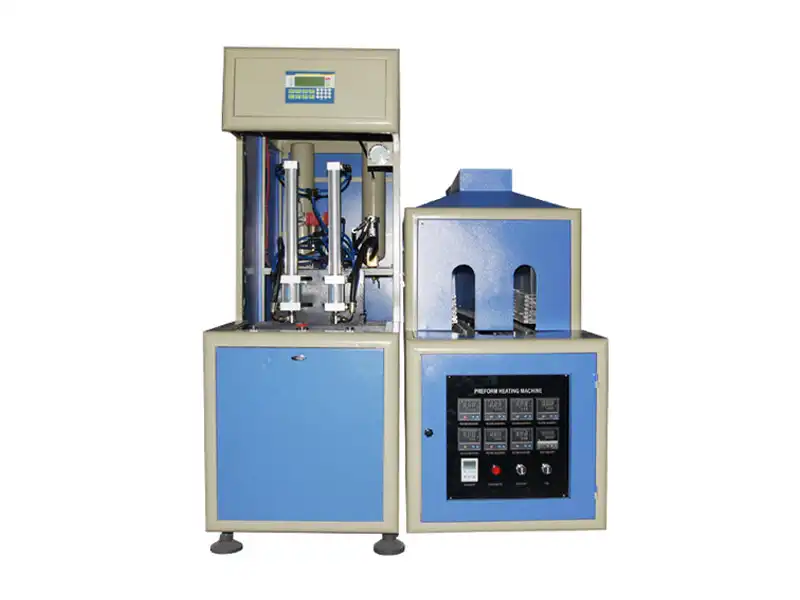
Manual Filling Line
Features low investment cost and simple operation, but with limited production capacity. It is suitable for small startups with low daily output requirements.
Semi-Automatic Line
Combines manual assistance and mechanical operation, balancing cost and efficiency, ideal for small and medium-sized factories with moderate production demands.
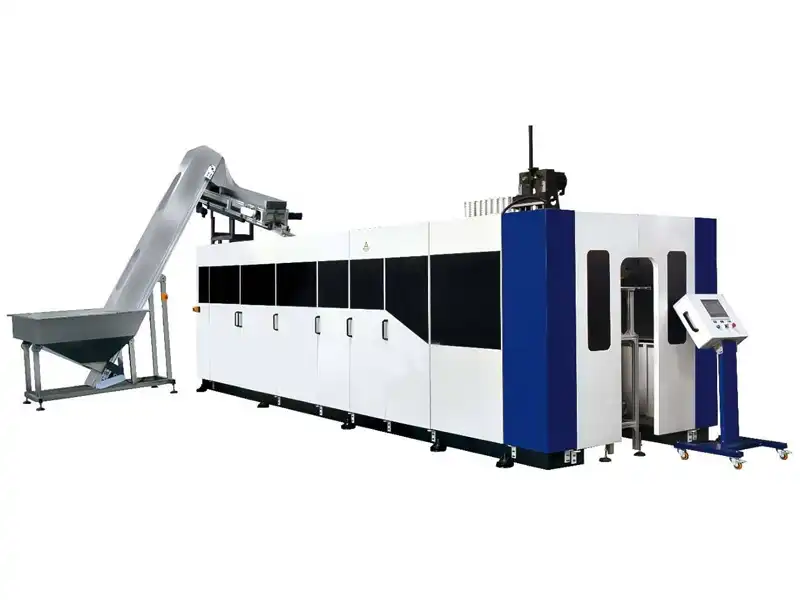
Fully Automatic Bottling Line
Realizes unmanned continuous production from bottle feeding to finished product packaging, with high efficiency, stable yield and low error rate, suitable for medium and large-scale mass production.
5. Evaluate Equipment Configuration
A complete bottled water production line supports one-stop production from raw water treatment to finished product packaging. Before purchasing, you need to check the complete machine configuration to ensure full-process production capacity. A standard complete line mainly includes the following equipment:
- Water Treatment System
- Bottle Blowing Machine
- Bottle Washing Machine
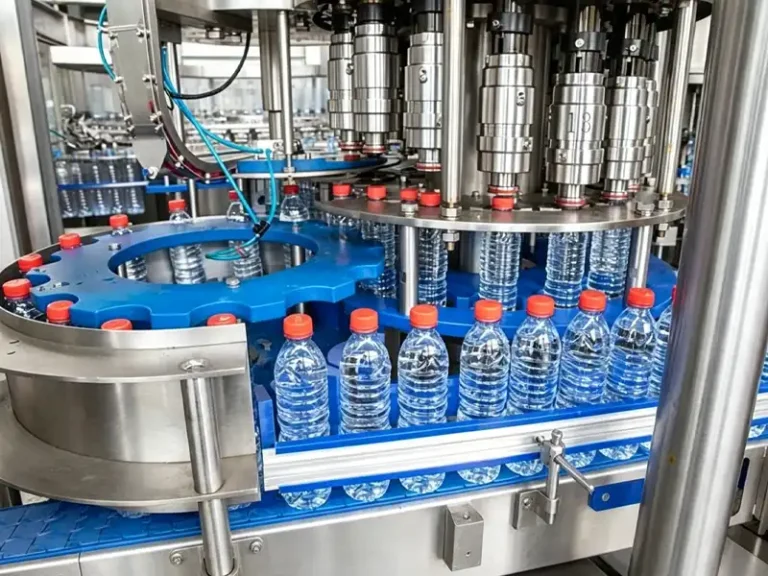
- Water Filling Machine
- Capping Machine
- Labeling Machine
- Coding Machine
- Packaging Machine
Different Types of Bottled Water Production Lines
We provide customized production line configurations based on production scale, packaging type, and the category of the finished water product. Below are the most mainstream and high-demand types of bottled water production lines in the industry.
1. Small Bottled Water Production Line
A small bottled water production line is an entry-level, cost-effective solution with small footprint and low energy consumption. It features simple operation and flexible installation, with a capacity of 2000–6000 bottles per hour. It requires less labor and factory space, ideal for trial production and small-batch orders.
Best for: Startups, new water plants and local small factories.
2. PET Bottle Water Filling Line
The PET bottle water filling line is the most popular standard line for commercial bottled water production. It supports 330ml, 500ml, 1.5L, 2L and other common PET bottle sizes. The fully automatic process covers bottle washing, filling, capping, labeling, coding and packaging.
It runs stably with a low failure rate and fits both purified water and mineral water production, widely used in retail, supermarket and catering water supply scenarios.
3. 5 Gallon Water Filling Line
The 5 gallon water filling machine is specially designed for barreled drinking water. It focuses on high-standard bucket rinsing, disinfection, quantitative filling and sealed capping.
It effectively cleans recycled buckets to avoid secondary pollution and meets strict food safety standards. This line is the core equipment for office and household bottled water delivery and distribution industries.
4. Mineral Water Production Line
A professional mineral water production line adopts UF ultrafiltration technology. It removes bacteria and impurities while retaining natural mineral substances in raw water, which meets natural mineral water production standards.
Equipped with ozone sterilization systems, it ensures stable water quality, pure taste and long shelf life. It supports small PET bottles and high-end glass bottle packaging for premium mineral water markets.
5. Pure Water Production Line
The pure water filling line adopts mature RO reverse osmosis treatment technology. It deeply filters heavy metals, microorganisms and contaminants to produce standard purified water.
With simple workflow, low operation cost and easy maintenance, the fully automatic pure water filling line is suitable for large-scale, mass production of civilian bottled purified water.
How Much Does a Bottled Water Production Line Cost?
When investing in a bottled water plant, the cost of the production line is a primary concern for enterprises. However, this cost is not determined by a single piece of equipment; rather, it is influenced by various factors such as production capacity, the level of automation, bottle specifications, water treatment requirements, and project-specific customization needs. Equipment configurations and investment budgets can vary significantly depending on the scale and market positioning of the project.
To obtain a more accurate cost assessment, enterprises need to select a production solution that aligns with their specific market demands, production goals, and plant layout plans. Contact Snowy Owl Water, a professional bottled water production line manufacturer for a customized quotation based on your project requirements.
Common Mistakes When Buying a Water Bottling Line
- Focusing Only on Low Prices and Neglecting Overall Compatibility
- Many buyers prioritize price comparisons and blindly choose inexpensive equipment, ignoring mismatches between production capacity, configuration, and their own production needs. This results in high failure rates, high energy consumption, and high maintenance costs down the line, ultimately leading to higher overall investment.
- Inefficient Production Capacity Selection
- If production capacity is set too low, it becomes insufficient when order volumes increase, making expansion impossible; if set too high, equipment remains idle for long periods, wasting factory space, electricity, and investment costs.
- Neglecting Water Treatment System Configuration
- Focusing solely on the main filling machine while downplaying the water treatment system. Different treatment processes are required for purified water and mineral water; inadequate configuration can result in substandard water quality, failure to pass regulatory inspections, and non-compliant products.
- Blindly Pursuing Fully Automated, High-End Configurations
- Blindly installing fully automated equipment without considering actual production volume, labor availability, and facility space leads to redundant functions, complex operations, and high maintenance costs—features that small factories simply cannot utilize.
- Ignoring Bottle Type and Equipment Compatibility
- Failure to plan for primary bottle types (small PET bottles, 5-gallon jugs, glass bottles) early on results in equipment with poor versatility. Later attempts to switch specifications require machine modifications and component replacements, which are time-consuming and costly.
- Focusing Only on Equipment, Not After-Sales and On-Site Services
- During procurement, companies focus solely on comparing machine specifications while neglecting the manufacturer’s installation, commissioning, technical training, and after-sales response times. This leaves them without support when equipment malfunctions, severely impacting production.
- Failure to Verify On-Site Facility Compatibility
- Failure to verify equipment dimensions, utility connections, and space requirements in advance leads to situations where, upon delivery, the equipment does not fit or the utilities are incompatible, necessitating a second round of facility modifications.
Complete Bottled Water Production Line Process
A complete bottled water production line covers the entire process from raw water treatment to finished bottle packaging. Each stage works together to ensure stable production efficiency and consistent water quality.
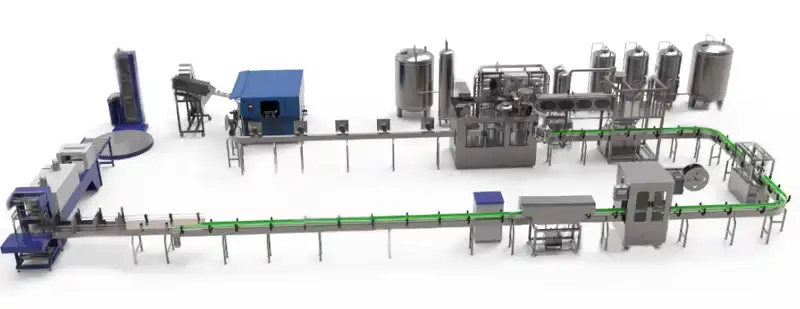
Process: Raw Water Treatment—Bottle Manufacturing—Bottle Cleaning—Filling and Capping—Labeling—Packaging
Water Production Line Parameters
| System Speed 500ml PET bottle | 2500 Bottle/hr | 4000 Bottle/hr | 6000 Bottle/hr | 12000 Bottle/hr | 16000 Bottle/hr | 20000 Bottle/hr | 24000 Bottle/hr |
| Beverage Output | 1250 liter/hr | 2000 liter/hr | 3000liter/hr | 6000liter/hr | 8000liter/hr | 10000 liter/hr | 12000liter/hr |
| Mobile Machine | yes | No | |||||
| Washing Head | 8 | 12 | 18 | 24 | 32 | 40 | 50 |
| Filling Head | 8 | 12 | 18 | 24 | 32 | 40 | 50 |
| Capping Head | 3 | 4 | 6 | 8 | 10 | 12 | 16 |
| Dimensions (mm) | 2230x1610x2100 | 2440x1740x2100 | 2820x1940x2100 | 3080x2400x2280 | 3860x2760x2200 | 4100x3100x2300 | 4100x3100x2300 |
| Recommended Operator | 1 | 1 | 1 | 1 | 1 | 1 | 1 |
| Lubrication System | Semi-automatic | Automatic | |||||
| Optional equipment | Bottle Blowing Machine | Perform Injection Machine | |||||
| Bottle Blowing Machine | |||||||
| Labeling Machine | |||||||
| Date Printer | |||||||
| Packaging Machine | |||||||
| Water Treatment | |||||||
| Conveyor System | |||||||
Customized Bottled Water Production Line Solutions
Every bottled water project has different requirements. We provide customized bottled water production line solutions based on your production capacity, bottle type, water source, factory layout, and automation needs, helping you build an efficient and reliable water bottling system.
Get a customized water bottling solution and receive a production plan tailored to your business requirements.
FAQs
Q1: What capacity should I choose for a bottled water production line?
A1: Capacity depends on your market demand, investment budget, and factory scale. Small factories usually choose lower-speed lines, while commercial plants require high-speed automatic systems.
Q2: How much does a bottled water production line cost?
A1: The cost depends on production capacity, automation level, water treatment requirements, and equipment configuration.
Q3: What equipment is included in a bottled water production line?
A3: A complete line usually includes a water treatment system, filling machine, capping machine, labeling machine, coding machine, and packaging equipment.
Q4: What is the difference between PET and 5 gallon water filling lines?
A4: PET bottle lines are designed for disposable bottled water, while 5 gallon lines are mainly used for reusable drinking water containers.
Q5: How long does it take to install a water bottling line?
A5: Installation time depends on line size and project complexity. Complete projects usually include equipment installation, testing, and operator training.
Q6: Can I customize a bottled water production line?
A6: Yes. Manufacturers can customize capacity, bottle size, automation level, layout, and electrical standards according to your requirements.
Q7: What water treatment system is needed before bottling?
A7: The treatment system depends on raw water quality and final water requirements, including RO, UF, filtration, UV, and ozone systems.
Q8: How to find a reliable water filling line manufacturer?
A8: Choose manufacturers with factory experience, engineering capability, certifications, installation support, and successful overseas projects.
Conclusion
Choosing the right bottled water production line is an important step for building a successful water bottling business. The ideal solution should match your production capacity, water quality requirements, bottle types, automation level, and future expansion plans. A well-designed production line not only improves production efficiency and product quality but also helps reduce operating costs over the long term.
By working with an experienced bottled water production line manufacturer, you can get professional guidance, customized equipment configuration, and complete technical support from planning to installation. Whether you are starting a small water plant or expanding an existing production facility, selecting the right bottling solution will help ensure stable and efficient production.
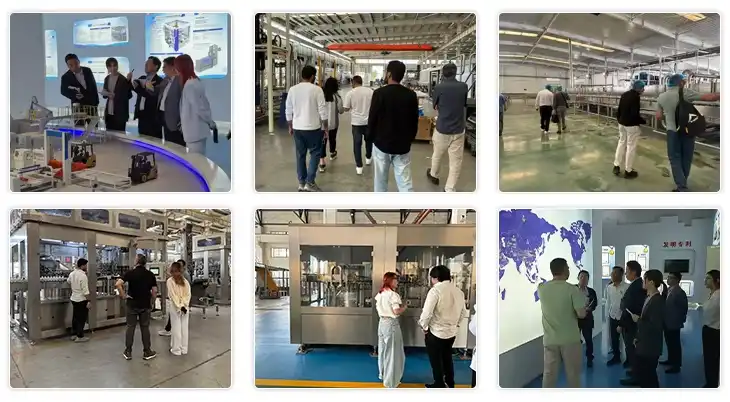
When you are ready to choose a bottled water production line for your project, Snowy Owl Water’s engineering team can provide a complete solution based on your production capacity, water source conditions, bottle specifications, and factory requirements. With professional experience in water treatment systems, filling equipment, and complete bottling projects, we help customers design reliable production lines that meet different market demands, from small water plants to large-scale beverage production facilities.