Introduction
There isn’t just one type of filling machine. Even though they all involve filling containers with products such as water, juice, milk, cooking oil, beer, sauces, and honey, each has different requirements for filling equipment. Some products have excellent flow properties and can be filled using gravity; others are more viscous and require piston-type filling. Carbonated beverages and beer also involve issues related to pressure and carbonation, so the equipment design naturally differs as well.
Therefore, when you see the term “filling machine,” you shouldn’t just focus on the machine’s name. When actually selecting equipment, you should consider what product you’re filling, what type of packaging you’re using, how many bottles you need to produce per hour, and whether you ultimately want a standalone machine or a complete production line.
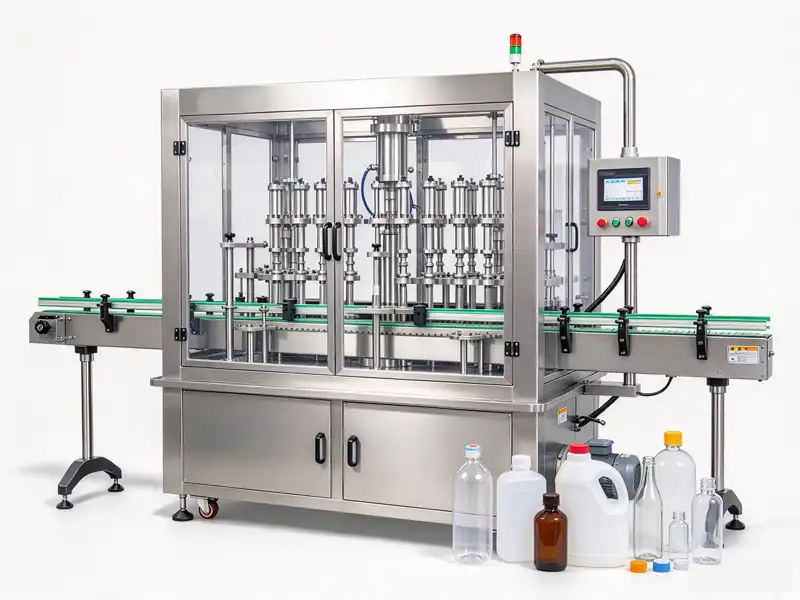
Table of Contents
What are the different types of filling machines
From a practical standpoint, filling machines can be classified in various ways.
Common classifications include:
- By the product being filled
- By filling principle
- By degree of automation
- By packaging container
- By industry and production requirements
Among these, liquid filling machines, piston-type filling machines, gravity-fed filling machines, overflow-type filling machines, pressure-fed filling machines, and fully automatic filling machines are relatively common in industrial production. These categories are not entirely mutually exclusive. A single piece of equipment may fall into the categories of “liquid filling machine,” “automatic filling machine,” and “overflow-type filling machine” simultaneously.
Filling Machines by Product Type
This is the easiest classification method to understand. The product you’re filling typically determines which filling method the equipment should use.
Liquid Filling Machine
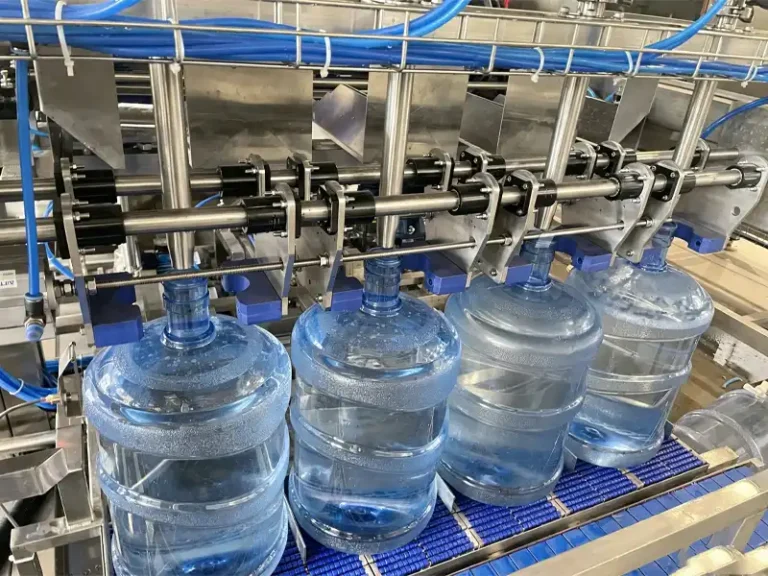
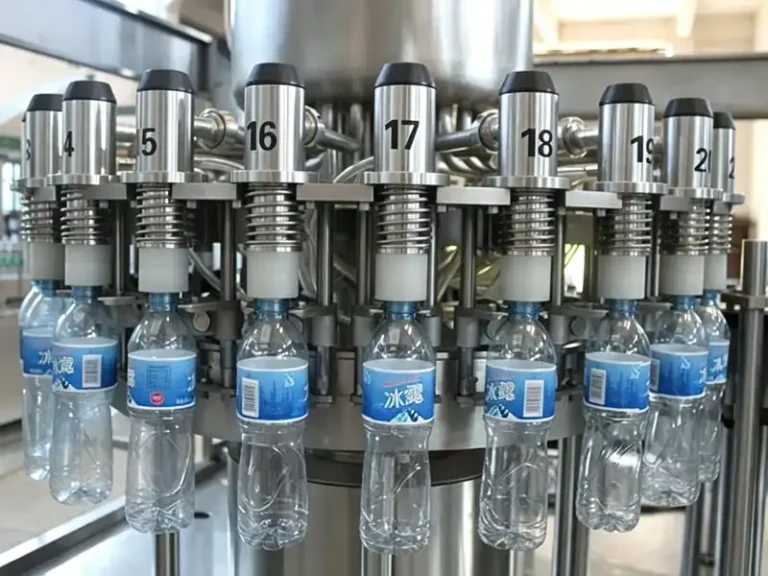
Liquid filling machines are primarily used for liquid products such as water, fruit juice, beverages, milk, and cooking oil. However, the term “liquid” actually covers a very broad range. Water has very low viscosity and flows quickly; cooking oil has a different flow characteristic; and milk, certain fruit juices, and products containing pulp or particles place different demands on the filling system.
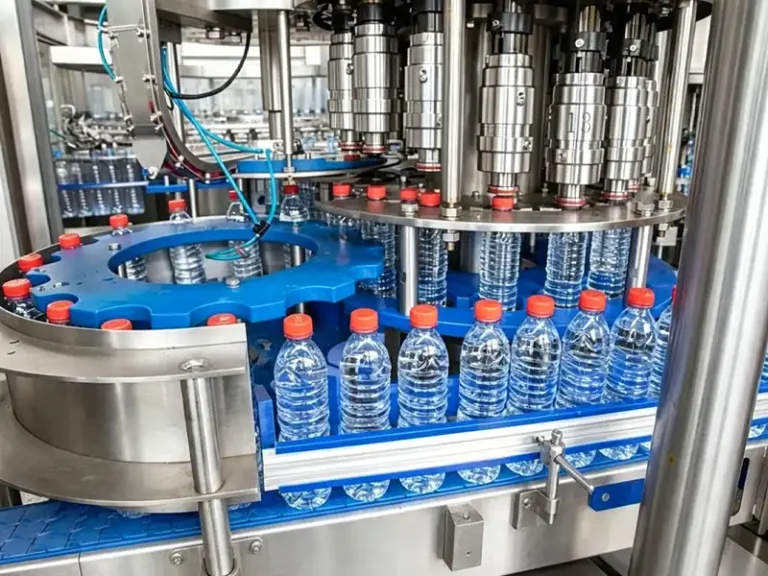
For bottled water production, equipment for water treatment, filling, capping, and labeling is typically connected to form a complete water filling line. For factories requiring continuous production, this solution is more common than purchasing a single filling machine.
If your product is drinking water, you may also want to refer to our Water Treatment System, as water treatment and downstream filling are actually considered together.
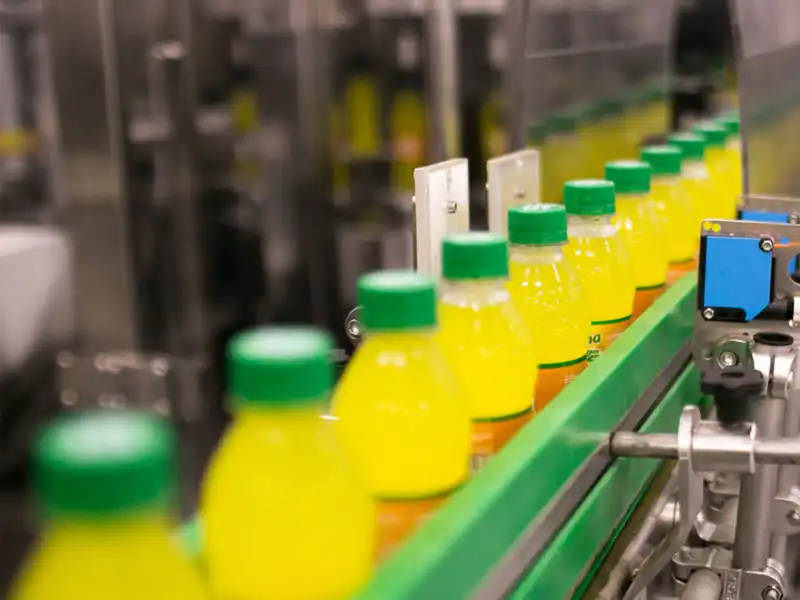
Juice Filling Machine
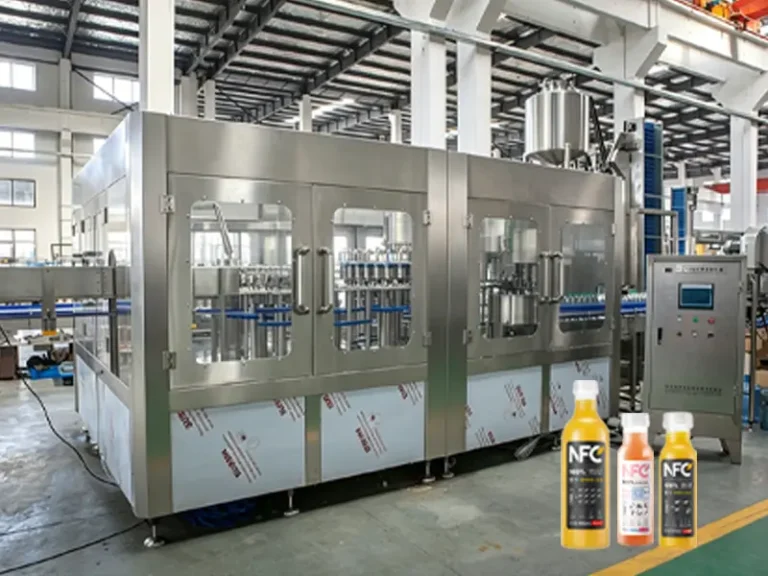
The situation with fruit juice is a bit more complex than with plain water. Different juices may contain pulp, fiber, or have higher viscosity, and the production process may involve pasteurization, hot filling, or other treatment methods.
For example, NFC juice is pressed directly from fruit without undergoing concentration and reconstitution, so the requirements for raw materials and production processes differ from those of regular fruit juice beverages.
If you’re not very familiar with this type of product, you can start by reading: What Is NFC Juice?
In commercial juice production, filling machines are typically just one part of the entire production line. Upstream processes may include fruit processing, juicing, blending, homogenization, and pasteurization, while downstream processes may involve capping, labeling, and packaging equipment. Therefore, when purchasing a juice production line, you shouldn’t base your selection solely on “how many bottles per hour”; you must first determine the specific properties of the juice and the production process.
Milk Filling Machine
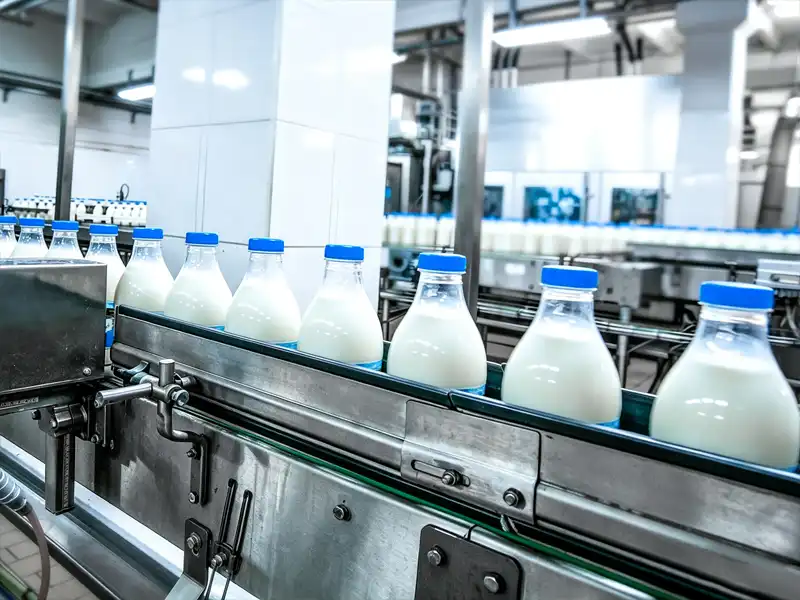
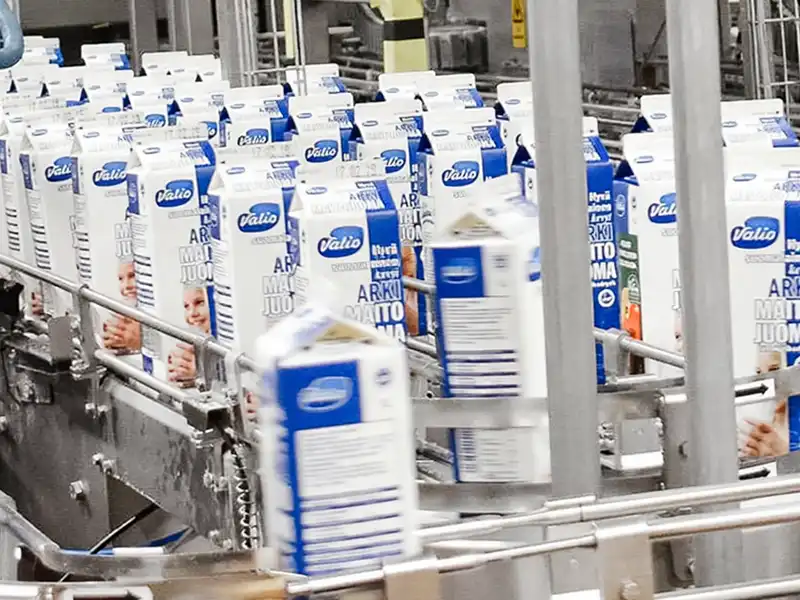
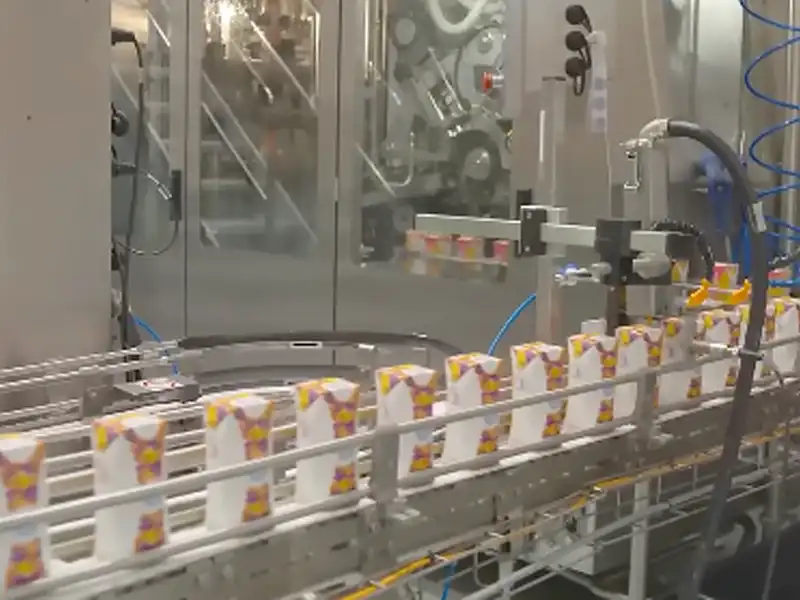
Milk production involves strict hygiene requirements. Common products include fresh milk, flavored milk, and other dairy products. Different products may be packaged in PET bottles, glass bottles, plastic cups, or other types of packaging.
Therefore, when selecting milk filling equipment, it is not enough to consider only the filling volume; one must also take into account the product type, packaging method, filling temperature, production capacity, and cleaning and hygiene requirements. For dairy processing plants, it is typically necessary to consider pretreatment, pasteurization, filling, and packaging as an integrated process.
Edible Oil Filling Machine
Although cooking oil and water are both liquids, they behave differently during filling. Oil has a higher viscosity, so many cooking oil production facilities use volumetric or other filling methods suitable for oil products.
Common packaging sizes include:
- 500 ml bottles
- 1 L bottles
- 2 L bottles
- 5 L bottles
If different sizes need to be produced on the same production line, it is also necessary to consider changeovers and adjustments to the filling volume. For related equipment, please refer to the edible oil production line.
Paste Filling Machine
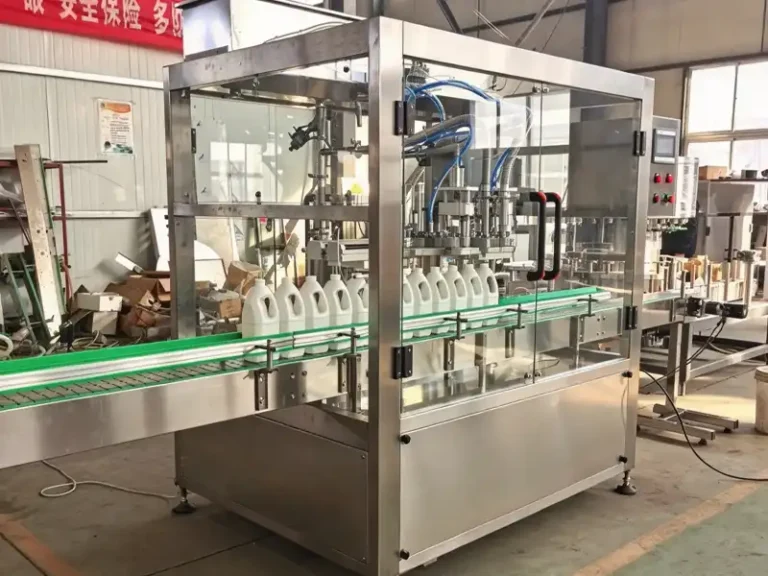
If a product does not flow as easily as water, you’ll need to consider a different type of equipment. These products typically have high viscosity, so filling by gravity alone may not be suitable. Piston filling machines are commonly used. They control the volume of product entering the container through the movement of a piston, making them suitable for viscous products.
Of course, the specific choice depends on the product’s viscosity and particle size. For example, sauces containing large particles cannot be handled using a standard paste filling machine alone.
Common examples include:
- Honey
- Ketchup
- Jam
- Sauce
- Cream
- Lotion
- Shampoo
@snowy.owl.product Single head filling machine, essential Single head filling machine, essential oil filling machine, precision filling filling machine, precision filling#machine #tiktok #filling
♬ original sound – A.A 😊
Powder & Granule Filling Machine
The operating principles of equipment for filling powdered and granular products differ. For powdered products, screw-type metering filling—also known as an auger filling machine—is the most common method. For granular products, volumetric metering or weigh-fill systems may be used.
| Category | Products |
|---|---|
| Powder Products | Milk powder, Protein powder, Flour, Spice powder |
| Granule Products | Rice, Sugar, Seeds, Coffee beans, Pet food |
Therefore, if someone simply tells an equipment manufacturer, “I want a filling machine,” that information is actually far from sufficient. The first thing that needs to be confirmed is what the product actually is.
Filling Machines Classified by Filling Principle
Atmospheric Pressure Filling
Under atmospheric pressure, the liquid is filled into the packaging container by its own weight. This method is suitable for low-viscosity liquids that do not contain gas and are not sensitive to exposure to the atmosphere.
There are two filling methods: one involves lifting the container using a lifting mechanism for filling; the other involves moving the filling valve downward to fill the container.
Isobaric Filling
First, the container is pressurized to equalize the pressure inside the container with that in the liquid storage tank; then, the liquid material from the storage tank is filled into the packaging container.
Suitable for: carbonated beverages.
Features:
- Reduces CO₂ loss, preserving the flavor and quality of carbonated beverages;
- Prevents excessive foaming during filling, ensuring accurate package volume.
Vacuum Filling (Negative Pressure)
The container is evacuated to a vacuum before the liquid is filled into it.
Advantages:
- Increases filling speed;
- Reduces residual air in the packaging container, preventing liquid oxidation and spoilage, and extending the product’s shelf life;
- Limits the escape of toxic liquids;
- Prevents filling of containers with cracks or chips. Suitable for non-carbonated liquids with slightly higher viscosity that are prone to oxidation and spoilage upon contact with air, as well as toxic liquids.
Pressure Filling
Liquid material is forced into the packaging container using pressure (mechanical pressure, pneumatic pressure, hydraulic pressure, etc.). Suitable for: filling viscous materials with high viscosity and poor flowability, which can increase filling speed. For some low-viscosity liquid materials, pressure filling may also be used due to the material’s inherent properties or limitations imposed by the packaging container’s material and structure.
Classified by Metering/Filling Method
| Type | Measuring Principle | Application | Accuracy Features |
|---|---|---|---|
| Servo Piston Filler | Volumetric measurement (syringe-type suction) | Universal for low–high viscosity; handles fine particles | High accuracy, wide adjustable range, customizable anti-corrosion |
| Weighing Filler | Weight-based measurement | Large-drum lubricant, high-value oils | Unaffected by temperature & density, stable accuracy |
| Flow Meter Filler | Flow meter measurement | Low–medium viscosity homogeneous liquids; ideal for large drums | Continuous filling, but particles may wear the flow meter |
| Screw Pump Filler | Screw conveying | High-viscosity, particle-containing slurry | Stable conveying, low shear, higher maintenance cost |
| Peristaltic Pump Filler | Hose squeezing delivery | Pharmaceutical small doses (oral liquid, injections) | Hose contacts material separately, no cross-contamination |
Classified by Level of Automation
They are categorized into fully automatic, semi-automatic, and manual filling machines. Fully automatic models can automatically complete processes such as bottle feeding, filling, capping, and labeling, and are equipped with functions such as automatic shutdown in case of missing bottles or no bottles detected; semi-automatic models require manual assistance for operations such as cap sorting or weighing.
Bottle Filling Machine
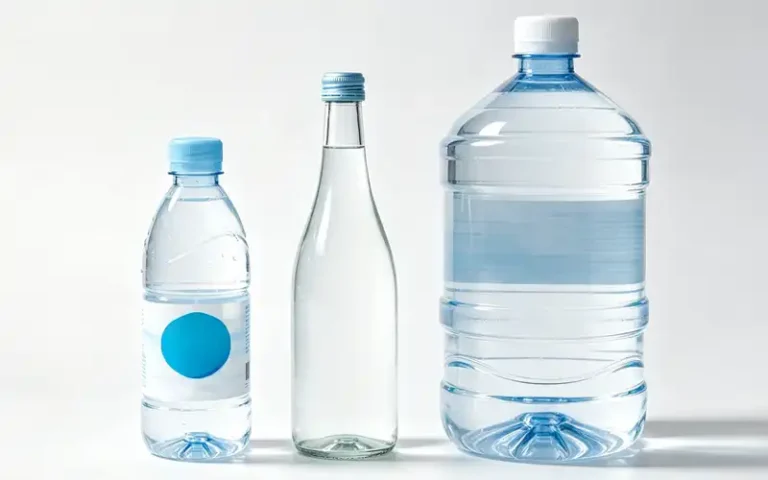
Bottle filling machines are widely used for products packed in PET, HDPE, and glass bottles. The machine configuration depends on the bottle size, neck diameter, shape, and the product being filled. Water, juice, milk, edible oil, beer, and other beverages can all use bottle filling equipment, but the filling method and machine design may be different.
Can Filling Machine
Can filling machines are mainly used for products packed in aluminum or metal cans, especially beer, carbonated drinks, and other beverages. The filling process needs to match the can size and product characteristics. For carbonated products, the filler is normally integrated with a seaming system so that the cans can be filled and sealed in a continuous process.
Cup Filling Machine
Cup filling machines are designed for products packed in plastic or other types of cups. They are commonly used for yogurt, milk, juice, water, and some liquid or semi-liquid food products. Depending on the product and packaging, the machine can be combined with cup feeding, filling, sealing, date coding, and other operations.
Pouch Filling Machine
Pouch filling machines are used when products are packaged in flexible bags or pouches. They can handle products such as juice, milk, sauces, and other liquid or semi-liquid foods. The equipment may include pouch feeding, product filling, and heat sealing, with the exact setup depending on whether the pouches are pre-made or formed during the packaging process.
Jar Filling Machine
Jar filling machines are commonly used for products packed in glass or plastic jars, including honey, jam, sauces, cream, and other thicker products. Since these products often have higher viscosity than water, piston or other positive-displacement filling systems may be used. The jar size, product consistency, and required filling volume all affect the machine configuration.
How to Choose Among Different Filling Machines?
This is actually the most critical issue when purchasing equipment. Don’t just tell the supplier, “I want an automatic filling machine.” It’s best to prepare the following information in advance.
1. Low-Viscosity Clear Liquids (Good Flowability, No Particles)
Materials: Mineral water, purified water, baijiu, soy sauce, vinegar, 75% alcohol, disinfectant, toner, floral water, liquid pesticides, cleaning agents
- Atmospheric Gravity Filling Machines (The mainstream choice for large-scale mineral water “three-in-one” production lines; relies on gravity for filling, offering high speed)
- Flowmeter-Type Filling Machines (Turbine / Electromagnetic flowmeters; commonly used in small-to-medium-sized production lines)
- Vacuum Filling Machines (For beverages prone to foaming or oxidation, such as alcoholic beverages and clarified fruit juices; minimizes bubbles)
2. Carbonated Beverages
Products: Cola, soda, beer, carbonated fruit juice. Machine Type: Isobaric filling machines, with pre-pressurization inside the bottle to prevent carbon dioxide from escaping; primarily rotary three-in-one machines.
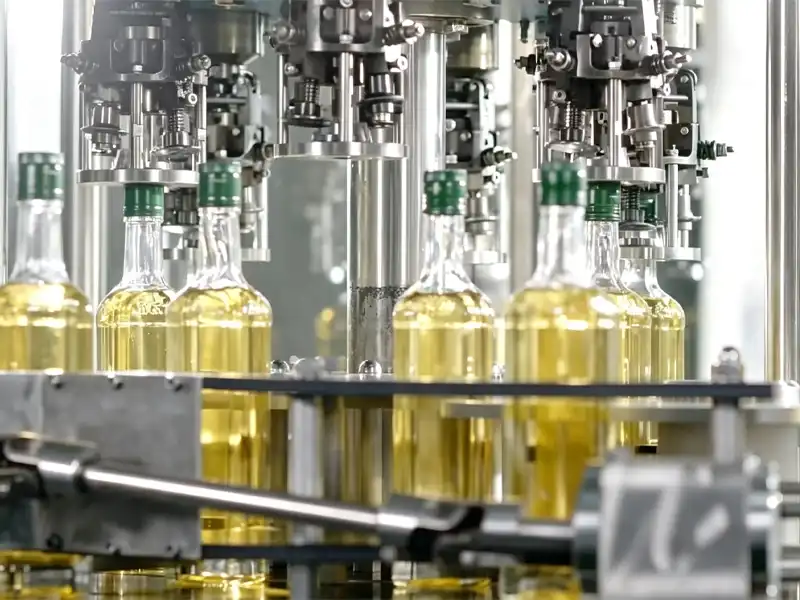
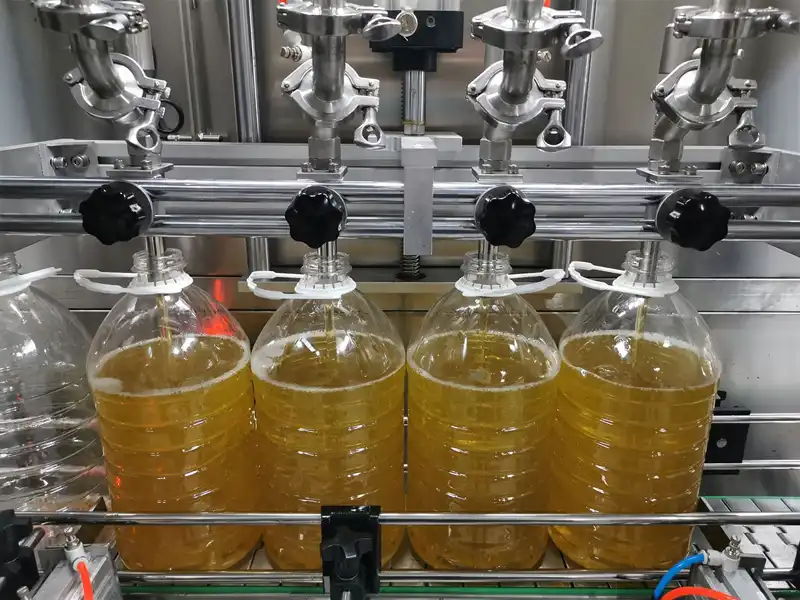
3. Oils (edible oil, lubricating oil, motor oil)
Items: Bottled cooking oil, large drums of lubricating oil, antifreeze
- Small bottles of cooking oil: Vacuum filling / Servo piston pump filling
- Large drums of lubricating oil and high-value oils: Weighing-based filling machines (not affected by temperature or density; measures by weight with consistent accuracy); typically fed by gear pumps equipped with anti-drip valves and FKM fluorocarbon seals

4. Medium- to high-viscosity, stringy liquids (personal care lotions, shampoo, laundry detergent, honey, syrup)
Products: Shampoo, body wash, thick laundry detergent, honey, maltose, ointments.
Machine Types: Piston (plunger) filling machines/servo piston pumps; screw pumps are available for viscous products; filling heads feature a suction-back mechanism to prevent dripping and avoid stringing or residue on bottles.
5. Corrosive Chemicals / Pesticides (Emulsifiable Concentrates, Water-Based Fertilizers, Dilute Acids)
Materials: Emulsifiable pesticide concentrates, water-based herbicides, liquid fertilizers, certain chemical solvents.
Machine Type: Diaphragm pump filling machine, constructed entirely of 316L stainless steel with PTFE seals; explosion-proof models are available for flammable solvents; prevents contamination of the pump body and resists acid and alkali corrosion.
6. Small-Volume Pharmaceutical Products (Oral Solutions, Injectable Solutions)
Products: Oral solutions, pharmaceutical solutions.
Machine Type: Peristaltic pump filling machine; the pump tubing is the only part in contact with the product, making it easy to replace, preventing cross-contamination, and ensuring a high level of hygiene.
7. What type of packaging will be used? What is the fill volume per bottle?
Whether it’s a PET bottle, glass bottle, can, cup, or pouch, please provide both the container capacity and dimensions. Common fill volumes include 250 ml, 330 ml, 500 ml, 1 L, 5 L, and 20 L. Different specifications may require different numbers of filling heads and changeover methods.
8. What is the required hourly output?
For example, 1,000 bottles/hour and 30,000 bottles/hour require completely different equipment configurations. Do not purchase equipment that exceeds your actual needs simply to achieve higher speeds.
9. Is this a single machine or a complete production line?
If you are only producing small batches, a single semi-automatic filling machine may be sufficient.
If you are producing bottled water, juice, or beverages on a commercial scale, you should consider a complete filling production line.
Filling Machine Types Comparison
| Filling Machine Type | Typical Products | Main Feature |
|---|---|---|
| Liquid Filling Machine | Water, Juice, Milk | For liquid products |
| Volumetric Filling Machine | Water, Oil, Liquids | Controls filling volume |
| Gravity Filling Machine | Low-viscosity liquids | Uses gravity |
| Piston Filling Machine | Honey, Sauce, Cream | Suitable for viscous products |
| Overflow Filling Machine | Water, Beverages | Consistent liquid level |
| Pressure Filling Machine | Beer, Carbonated Drinks | Suitable for pressurized products |
| Powder Filling Machine | Milk Powder, Flour | For powder products |
| Automatic Filling Machine | Bottled beverages | Continuous automated production |
| Semi-Automatic Filling Machine | Small and medium production | More manual operation |
A filling machine is not just “a machine.”
In industrial production, filling is typically just one step in the entire production process.
Take bottled water as an example; a production line might include:
Raw Water Treatment → Water Purification → Bottle Rinsing → Filling → Capping → Labeling → Coding → Packaging
Juice production may include additional processes such as fruit processing, juicing, blending, homogenization, and pasteurization.

FAQs
What is the most common type of filling machine?
Liquid filling machines are among the most commonly used filling machines because many food, beverage, chemical, and daily-use products are liquids. The specific filling method still depends on the product viscosity, container, filling volume, and production capacity.
What type of filling machine is used for water?
Water is usually filled using liquid filling equipment designed for low-viscosity products. Depending on the production capacity and bottle type, the line may use volumetric, gravity, overflow, or other suitable filling methods.
Which filling machine is suitable for thick liquids?
Piston filling machines are commonly used for thick liquids such as honey, sauces, jams, and creams. The actual machine configuration should be selected according to the product viscosity, filling volume, container, and required production speed.
What is the difference between a gravity filler and a piston filler?
A gravity filler uses the natural flow of the liquid to fill containers, making it suitable for many low-viscosity products. A piston filler uses a piston to draw and discharge a measured amount of product and is often used for thicker liquids.
Which filling machine is used for carbonated beverages?
Carbonated beverages generally require pressure-based filling equipment because the product contains dissolved CO₂. The filling process needs to control pressure and reduce excessive foaming and gas loss.
Can one filling machine handle different bottle sizes?
Many filling machines can be adjusted for different bottle sizes, but the available range depends on the machine design. Bottle diameter, height, neck size, filling volume, and production speed should be confirmed before selecting the equipment.
How do I choose the right filling machine?
Start with the product, viscosity, container type, filling volume, and required capacity. Then determine the appropriate filling method and automation level. For a complete factory project, the filling machine should also match the upstream and downstream equipment.
Therefore, if your goal is to build a commercial production line, it is recommended that you do not base your procurement solely on the specifications of a single filling machine. Instead, first determine your product, packaging specifications, and target output, and then work backward to identify the equipment needed for the entire line.
Conclusion
The main differences among various types of filling machines lie in the product, filling method, packaging format, and level of automation.
Water and other low-viscosity liquids can typically be filled using liquid filling equipment; high-viscosity products such as honey and sauces require filling methods like piston filling; products in clear bottles may prioritize consistent liquid levels; and beer and carbonated beverages require filling processes specifically designed for carbonated products.
If you are selecting equipment, it is generally more practical to first determine the product, container, filling volume, and production capacity before deciding on the filling method, rather than looking for a “universal filling machine” right away.
For projects requiring production equipment for water, fruit juice, milk, beer, carbonated beverages, or cooking oil, you can configure a corresponding liquid filling production line based on the product and production capacity.